The Final Fifty Miles: Why Operational Excellence Collapses Before It Reaches the Front Door
There is a particular kind of frustration reserved for operations leaders who have done nearly everything right. The procurement team negotiated favorable rates. The warehouse runs lean, accurate, and fast. Inventory turnover is healthy, and order processing times would make competitors envious. Then a customer emails on a Tuesday morning asking where their package is — and the honest answer is that nobody is entirely sure.
This is the last-mile problem, and it is far more common than quarterly logistics reports tend to reveal.
The final stretch of any shipment — loosely defined as the last fifty miles between a regional distribution hub and the recipient's address — is where the greatest concentration of delivery failures, cost overruns, and customer experience breakdowns occur. It is also, historically, the portion of the supply chain that receives the least strategic attention relative to its operational complexity. Fixing that imbalance is one of the defining logistics challenges facing US shippers today.
The Illusion of Upstream Control
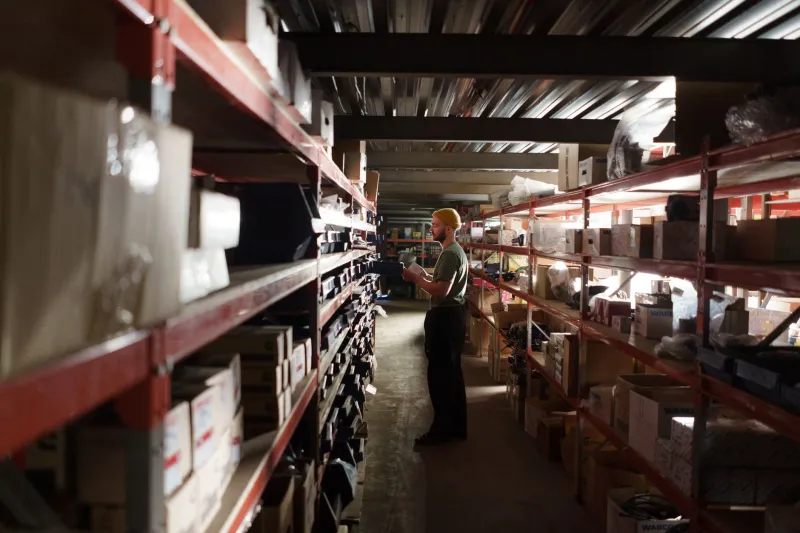
Modern fulfillment operations have become remarkably sophisticated. Warehouse management systems track inventory at the unit level. Automated picking technology reduces human error. Sophisticated demand forecasting minimizes overstock and stockouts. These are genuine achievements, and they matter.
But they share a common characteristic: they operate in controlled environments. The warehouse is a closed system. Variables are manageable. When something goes wrong inside a distribution center, there are established protocols, supervisors on the floor, and technology to flag the issue immediately.
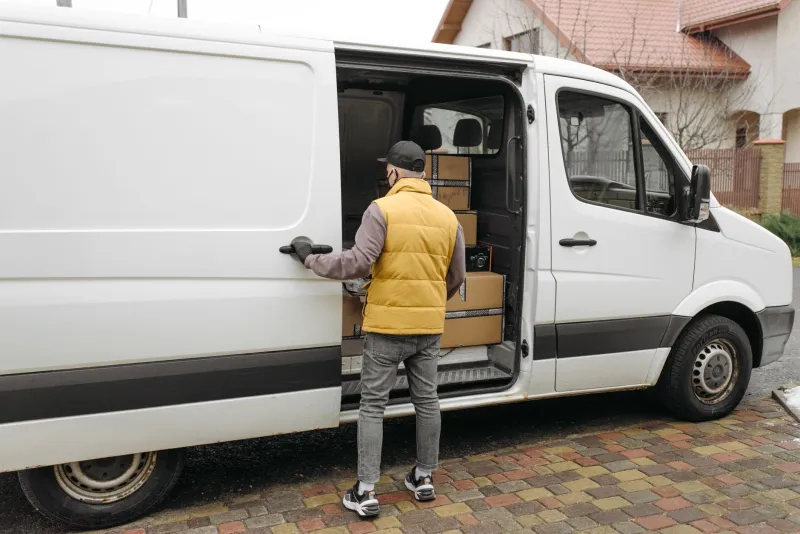
The moment a package leaves that controlled environment and enters the delivery network, it enters a world defined by variability. Traffic patterns shift. Drivers encounter unexpected route complications. Apartment complexes present access challenges that no routing algorithm fully anticipates. A customer who listed their office address forgot they are working from home this week. These are not edge cases — they are the routine texture of last-mile delivery across any major US market.
The illusion of upstream control leads many operations teams to treat last-mile as a handoff problem rather than a strategic one. Once the package is tendered to a carrier, the thinking goes, responsibility transfers. What happens next is someone else's domain.
That assumption is costing shippers more than they realize.
Where the Friction Actually Lives
Breaking down last-mile failure points reveals a predictable set of recurring friction sources.
Address accuracy remains a surprisingly persistent issue. The USPS estimates that a significant percentage of shipments each year involve some form of address discrepancy — missing apartment numbers, transposed digits, outdated ZIP codes. Each discrepancy introduces delay, rerouting costs, or outright failed delivery attempts. Upstream systems that do not validate addresses at the point of order entry are effectively exporting that problem downstream, where it is far more expensive to resolve.
Failed delivery attempts represent both a cost and a customer experience failure. When no one is home to receive a package and the carrier lacks authorization to leave it, the result is a redelivery attempt — sometimes multiple attempts — that inflates per-package cost and erodes recipient satisfaction simultaneously. The rise of remote work has complicated delivery windows in ways that static scheduling models have not kept pace with.
Driver availability and capacity constraints have become acute, particularly in suburban and rural markets. The gig-economy delivery model that expanded rapidly during the pandemic has shown structural fragility, with driver churn and inconsistent coverage creating service gaps that shippers absorb as their own reliability problem, even when the failure originates with a contracted carrier.
Handoff ambiguity — the point at which responsibility for a package transitions between parties — generates a disproportionate share of customer service contacts. When tracking systems show a package as "out for delivery" for an extended period without resolution, recipients escalate. Those escalations consume support resources and, more importantly, damage the trust that repeat purchase behavior depends on.
The Multi-Channel Dimension
For shippers operating across multiple sales channels — direct-to-consumer e-commerce, marketplace fulfillment, retail replenishment — the last-mile challenge multiplies in complexity. Each channel may carry different delivery expectations, service level agreements, and carrier relationships. A package destined for a residential address through a direct website carries different handling requirements than a pallet destined for a retail distribution center.
Without a unified last-mile strategy that accounts for this channel diversity, shippers default to fragmented carrier arrangements that optimize for individual transactions rather than network-level performance. The result is inconsistent service quality, missed opportunities for volume-based carrier leverage, and visibility gaps that make proactive exception management nearly impossible.
A genuinely omnichannel approach to logistics — the kind that OmniPost's multi-carrier framework is built to support — requires treating last-mile not as a category-specific afterthought but as a shared strategic layer that cuts across all delivery channels simultaneously.
Rethinking the Last Mile as Strategic Infrastructure
The operational mindset shift required here is straightforward to describe and genuinely difficult to execute: last-mile logistics must be elevated to the same strategic priority level as warehouse operations, carrier procurement, and inventory management.
In practical terms, that means several things.
First, it means investing in address validation and data quality at the front end of the order process, not as a cleanup exercise after the fact. Catching discrepancies before a package enters the carrier network is orders of magnitude cheaper than resolving them after a failed delivery attempt.
Second, it means building delivery flexibility into the customer experience rather than treating it as a premium add-on. Offering recipients the ability to redirect packages, adjust delivery windows, or designate alternative pickup locations reduces failed attempts and shifts some of the logistical burden to the party with the most relevant information — the recipient themselves.
Third, it means establishing carrier performance benchmarks that extend beyond cost-per-shipment. On-time delivery rates, first-attempt success rates, and exception frequency should be tracked at the carrier and route level, with that data informing ongoing carrier selection and volume allocation decisions.
Finally, it means acknowledging that no single carrier serves every geography equally well. Regional carriers often outperform national networks in specific markets — certain rural corridors, dense urban ZIP codes, or suburban clusters where they have invested in local infrastructure. A multi-carrier strategy that incorporates regional options where they demonstrate performance advantages is not a concession to complexity; it is a rational response to the geographic reality of last-mile delivery in a country as geographically diverse as the United States.
The Doorstep Is the Brand
For most consumers, the delivery experience is the brand experience. It does not matter how elegantly a product was manufactured, how efficiently it was warehoused, or how competitively it was priced. What the customer remembers is whether the package arrived when expected, in good condition, without requiring them to chase down information or navigate a confusing return process.
That moment at the doorstep — or the lack thereof, when a package fails to appear — is the final expression of every upstream operational decision. Treating it as a secondary concern is a strategic error that no amount of warehouse efficiency can compensate for.
The shippers who are building durable logistics advantages right now are the ones who have stopped thinking of last-mile as the end of the supply chain and started treating it as the point where everything they have built either justifies itself or falls short. That reframe is not merely philosophical. It has direct consequences for carrier strategy, technology investment, customer communication, and ultimately, for the loyalty that drives long-term revenue.
Every package has to get somewhere. How it gets there — and whether it arrives on the first attempt, on time, with full visibility — is a choice that begins long before the delivery driver pulls up to the curb.