Same Platform, Different Rules: Why Wholesale and DTC Shipping Cannot Share the Same Operational Playbook

There is a persistent assumption embedded in the infrastructure of many omnichannel businesses: that a shipping strategy refined through years of direct-to-consumer experience is transferable, with minor adjustments, to every other channel the company serves. It is a reasonable-sounding premise. The carriers are often the same. The warehouses overlap. The technology platforms are shared. Why would the logic not carry over?
The answer lies in the nature of the buyer on the other end of the transaction — and in what that buyer expects when a shipment arrives.
Wholesale accounts, regional distributors, and retail partners operate in a fundamentally different commercial environment than the individual consumer refreshing a tracking page. Their requirements are not simply a scaled-up version of DTC delivery. They are structurally distinct. And businesses that fail to recognize this distinction are paying for it in ways that rarely appear as a single line item on a profit-and-loss statement.
The Architecture of a B2B Shipment
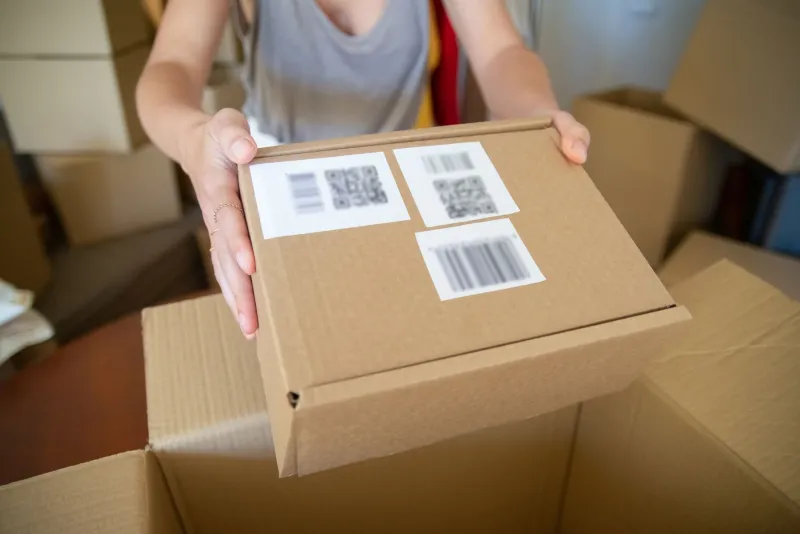
Consider what a typical DTC fulfillment operation is optimized for: individual units, variable order sizes, residential addresses, fast turnaround, and a customer experience layer that includes tracking notifications, branded packaging, and easy returns. Speed and visibility are the twin currencies of that model.
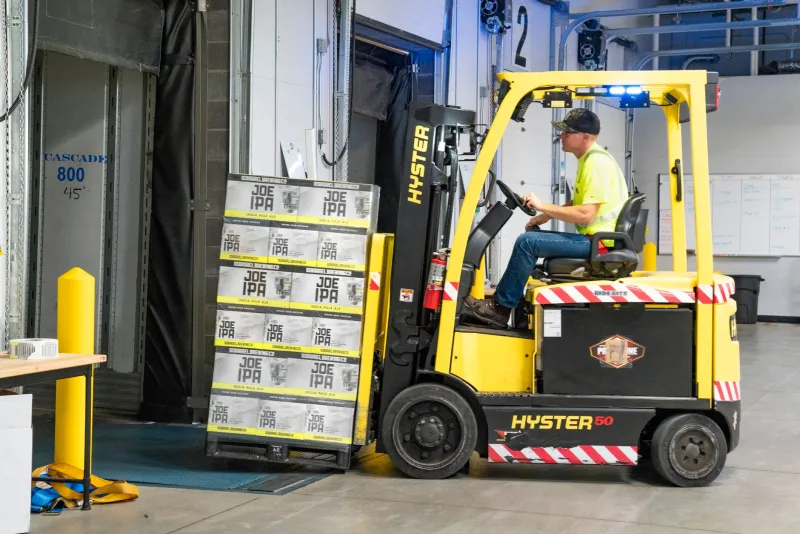
A wholesale shipment operates on different axes entirely. Orders arrive in cases, pallets, or full truckloads. Delivery windows are often appointment-based, with receiving docks that impose strict scheduling requirements. Retailers and distributors may impose routing guide compliance — specific carrier mandates, labeling standards, and advance shipping notice (ASN) protocols — that, if ignored, trigger chargebacks rather than customer service tickets.
The cost structure diverges just as sharply. Where DTC shipping economics hinge on negotiated parcel rates and dimensional weight calculations, B2B logistics involves freight classification, LTL consolidation, and carrier relationships that reward volume consistency over time. A business applying parcel-rate thinking to freight-volume orders will find itself either overpaying on small shipments or underserving large ones.
Where the Blind Spot Becomes a Business Problem
The consequences of a unified-but-misaligned shipping strategy tend to surface in three areas.
Margin compression at the channel level. When a single carrier contract and rate structure is applied across both DTC and wholesale orders, neither channel is optimized. Parcel carriers are not freight specialists. Freight carriers are not equipped for last-mile residential delivery. Forcing a single solution onto both creates inefficiencies that compound with volume.
Partner relationship strain. Wholesale and distribution partners have contractual expectations. Routing guide violations — wrong carrier selection, missing documentation, delivery outside agreed windows — generate financial penalties that erode the profitability of entire accounts. Unlike a consumer who files a complaint, a wholesale buyer may quietly reduce order frequency or shift volume to a competitor before the issue is ever raised internally.
Operational bottlenecks in shared infrastructure. When DTC and B2B orders flow through the same fulfillment logic, pick-and-pack workflows, carrier selection algorithms, and label generation processes are calibrated for one type of order at the expense of the other. The result is a warehouse that is neither fully efficient for consumer orders nor properly equipped for commercial ones.
Building Separate Operational Pathways
The solution is not necessarily separate physical infrastructure — though for businesses of sufficient scale, that may be warranted. What is required is channel-specific logic applied at every decision point in the fulfillment process.
Carrier segmentation by channel type. A multi-carrier platform should be configured to route DTC orders through parcel networks optimized for speed and residential delivery, while B2B orders are directed to freight carriers, LTL specialists, or regional distribution networks appropriate to the shipment profile. This is not simply a matter of choosing different carriers; it requires carrier contracts negotiated with the right volume assumptions for each channel.
Separate rate structures and cost allocation. Wholesale pricing models must account for the true cost of freight, including accessorial charges, fuel surcharges, and potential chargeback exposure. When these costs are pooled with DTC shipping expenses, they obscure channel-level profitability and make it nearly impossible to assess whether a wholesale account is actually contributing margin or consuming it.
Routing guide compliance as a standing operational requirement. For businesses serving major retailers — think regional grocery chains, national hardware stores, or big-box distributors — routing guide compliance is not optional. It requires dedicated workflow management: carrier validation, label verification, ASN generation, and delivery confirmation tied to the buyer's specific requirements. This capability should be built into the operational pathway for B2B orders as a baseline, not added reactively after the first chargeback arrives.
Delivery window management and appointment scheduling. Unlike consumer orders, which benefit from flexible delivery options, B2B shipments often require coordination with the receiving facility. Appointment scheduling capabilities — integrated into the carrier selection and dispatch process — reduce failed deliveries, minimize detention charges, and protect the business relationship.
The Technology Layer That Makes Separation Possible
For many businesses, the barrier to channel-specific shipping logic is not strategic clarity — it is platform capability. Shipping management systems designed primarily for DTC operations may lack the freight management features, EDI integration, or routing guide libraries required to handle B2B complexity.
This is where a comprehensive logistics platform capable of spanning multiple delivery channels becomes operationally significant. The ability to apply different carrier selection rules, cost models, and compliance requirements based on order type — without manual intervention — is the foundation on which a segmented shipping strategy is built. Without it, the operational separation that channel logic demands remains aspirational rather than executable.
A Framework for Channel Segmentation
For businesses ready to begin separating their shipping operations by channel, the following sequence provides a practical starting point.
First, audit current shipping data by order type. Identify what percentage of shipments are DTC versus B2B, what carriers are being used for each, and where cost and compliance failures are concentrated. The data will almost certainly reveal that one channel is subsidizing the other.
Second, map the specific requirements of each B2B account. Routing guides, delivery windows, labeling standards, and chargeback policies vary by partner. Creating a compliance matrix for each major account is a foundational step toward building the right operational pathway.
Third, negotiate carrier relationships appropriate to each channel. This means engaging freight carriers and LTL specialists for B2B volume, not simply extending existing parcel agreements. Volume commitments on the wholesale side may unlock rate structures that improve margin across the entire channel.
Finally, configure shipping platform logic to enforce channel-specific rules automatically. The goal is a system where the order type determines the operational pathway — carrier selection, labeling, documentation, and scheduling — without requiring manual routing decisions at the individual order level.
The Competitive Case for Getting This Right
Wholesale and distribution relationships represent a category of revenue that is often both larger in individual transaction value and more durable than DTC sales. Losing a wholesale account to a competitor who can meet routing requirements and honor delivery windows is a different kind of loss than losing a consumer order to a faster checkout experience. The stakes are higher, and the recovery timeline is longer.
Businesses that treat B2B shipping as a scaled version of their consumer operation are leaving competitive advantage on the table — and in many cases, actively funding their own margin erosion. The pathway forward requires acknowledging that every channel has its own delivery logic, and that serving each one well demands a strategy built specifically for it.